What does Science say about fruits and vegetables and health?
This is the free video What does Science say about fruits and vegetables and health? that can be downloaded, played and edit with our RedcoolMedia movie maker MovieStudio free video editor online and AudioStudio free audio editor online

VIDEO DESCRIPTION:
Play, download and edit the free video What does Science say about fruits and vegetables and health?.
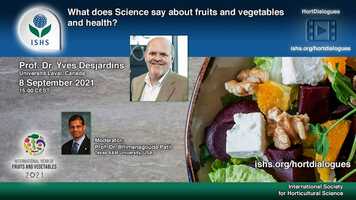
ISHS HortDialogues: What does Science say about fruits and vegetables and health?
Presenter: Prof. Dr. Yves Desjardins, Université Laval, Canada. Moderator: Prof. Dr. Bhimanagouda Patil, Texas A&M University, USA. September 8, 2021 - 15:00 CEST
Epidemiological studies clearly established the importance and the benefits of fruits and vegetables (FAV) consumption on health.
These horticultural commodities are a unique source of vitamins, macro and micronutrients, fibres, and secondary metabolites.
The latter regroup a wide array of metabolites (> 200,000) which provide abiotic and biotic plant stress protection. These include alkaloids, carotenoids, sulfur compounds, and polyphenols. Polyphenols have retained a lot of attention since they have repeatedly been shown to display bioactivity. Their mode of action is, however, still open to debate, but it is now clear that it goes far beyond their antioxidant properties.
The emerging importance of the gut microbiota in human physiology and its modulation by FAV provide insights on their beneficial impacts on health. As a matter of fact, it is now recognized that polyphenols but also fibres, glucosinolates and other FAV molecules can positively modulate the gut microbiota, reducing the harmful presence of pathobiont and favouring the presence of beneficial probiotic bacteria. These molecules clearly display prebiotic effects and prevent dysbiosis, increase microbial diversity and stimulate blooms of new classes of probiotic bacteria, like the mucus loving bacteria Akkermansia muciniphila, involved in the prevention of cardiometabolic disorders and also designated as the anti-obesity bacteria.
FAV polyphenols also play a key role in immunological responses and are potent drivers of the signals passing between the gut and the brain. They are thus involved in the prevention of cognitive decline, and probably of many physiological responses involving the central nervous system, which can dictate our behaviour and mood.
This webinar reassesses some of the well-described health effect of FAV polyphenols, ranging from glycemic control, lipid metabolism, weight gain and cognitive decline through the lens of the microbiota and the gut. The foremost importance of FAV diet on human physiology and livelihood is demonstrated.
Download, play and edit free videos and free audios from What does Science say about fruits and vegetables and health? using RedcoolMedia.net web apps